

As the federal government shutdown ended, much of the country was still recovering from one of the most expansive winter weather events in recent history.
A powerful winter storm system stretched more than 2,300 miles across the United States, impacting more than 240 million people in over 40 states—from Arizona to Maine. The storm brought extreme cold, heavy snow, and ice, resulting in the tragic loss of life and an estimated $115 billion economic impact nationwide. Communities, businesses, and transportation networks felt the effects for weeks.
Amid the recovery, which is still ongoing, one truth stands out:: America’s winter road maintenance professionals are vital to public safety, economic vitality, and national resilience. Collectively, they are the lifeline not only in a literal sense, but to the continuity of business, trade, and logistics coast to coast.
Even as the storms raged, the National Coalition for Open Roads (NCFOR) was on Capitol Hill in Washington, D.C., meeting with members of the House Transportation and Infrastructure Committee to discuss the federal/state relationship necessary to build, preserve, and protect America’s highways and byways. Focus was on the essential work being done across the country to keep roads open, safe, and reliable during extreme winter conditions.
Among key congressional leaders and staff meeting with NCFOR were Representatives Sam Graves, Mike Kennedy, Burgess Owens, Tony Wied, Pete Stauber, Jeff Hurd, and Mike Collins—members who are, at this writing, framing legislation for the new multiyear surface transportation reauthorization bill.
Conversations and strategy focused on the evolving challenges of increasingly erratic winter weather; shared goals and standards of keeping people and goods moving safely; and the opportunity to continue strengthening winter maintenance capabilities nationwide. Discussions highlighted the dedication of snow fighters, the value of innovation and data-driven decision-making, and the importance of collaboration among federal, state, and local partners.
Across the country, transportation agencies and maintenance teams worked tirelessly, often in dangerous conditions, to respond to an unprecedented storm. Their efforts helped restore mobility, support emergency response, and mitigate long-term economic disruption.
As winter weather events continue to test infrastructure systems, NCFOR remains committed to working alongside policymakers, transportation agencies, industry partners, and researchers to support best practices, long-term investment, and continuous improvement in winter road maintenance. Together, these efforts help ensure safer roads, stronger communities, and a more resilient transportation network for everyone.
Call to Action
Your experience matters. If you see opportunities to strengthen winter road service levels through policy, funding, research, or innovation, we want to hear from you. Share what is working, what is needed, and where we can do more. Together, we can work with state and federal policymakers to continue raising winter maintenance service standards and keeping America’s roads open, safe, and moving.
2026 Legislation Watch
Vermont Senate Bill 218
Sen. Anne Watson [D]Last Action: (2026-01-23) Referred to Committee on Finance per Senate Rule 31
Vermont Senate Bill S.218 would create a Chloride Contamination Reduction Program to reduce water pollution from road salt while maintaining safe winter travel. The bill directs the Secretary of Natural Resources to establish voluntary training and certification for commercial salt applicators and update training for municipal workers, based on best management practices that use the least amount of salt necessary. Certified applicators and trained municipal employees would receive legal protection (an affirmative defense) against liability for snow and ice hazards if they follow approved practices and keep detailed application records. The bill also requires reporting on salt usage, promotes public education on environmental impacts, calls for an inventory of salt storage facilities near water sources, and makes program implementation contingent on state funding.
New Hampshire House Bill 1810
Rep. William Darby (D)
Last Action: (2026-01-12) Hearing with House Ways and Means Committee
New Hampshire’s HB 1810 would create a $4 fee on bulk road salt, salt mixes, and brine sold in the state, with the revenue deposited into a new Road Salt Mitigation Fund. The bill also requires bulk salt sellers to be certified and registered, establishes annual reporting and record-keeping requirements, and authorizes audits and penalties for noncompliance. The money would fund a Road Salt Mitigation Program run by the Department of Environmental Services to educate the public and provide grants to municipalities and businesses that follow certified winter road maintenance practices to reduce salt pollution. Fiscal estimates project the program could generate about $4 million per year starting in FY 2028, while increasing costs for DOT and local governments, with some of those costs potentially offset through grant funding.
Utah House Bill HB0057
Partisan Bill (R)
Last Action: (2026-01-26) 2nd Reading in House 3rd Reading Calendar for House Bills
Utah HB 57 includes several updates tied to winter road conditions and snow removal, mainly focused on safe winter driving equipment and snowplow operations: it allows the use of tire chains when needed for safety because of snow, ice, or slippery conditions, and it reinforces winter traction standards through equipment rules like studded tire limitations and minimum tread requirements. The bill also includes language defining snowplow “echelon formation,” which refers to two or more snowplows working in a coordinated diagonal lineup to clear multiple lanes at the same time, helping improve roadway service levels during storms. Overall, the bill supports winter road safety and effective snow response by clarifying the legality of traction equipment and recognizing coordinated snowplow operations used to keep roads passable during severe weather.
Virginia Bill HJR46
Partisan Bill (D)
Last Action: (2026-02-02) Subcommittee Recommends Reporting (4-Y 1-N)
Virginia House Joint Resolution 46 would designate the week of the fourth Monday in January, starting in 2027 and continuing each year, as “Winter Salt Week” in Virginia. The resolution aims to raise awareness about responsible winter salt use to protect public safety while reducing chloride pollution in lakes, streams, and groundwater. It encourages smart salting practices to reduce environmental harm, infrastructure damage, and impacts on aquatic life, and highlights Virginia’s Salt Management Strategy (SaMS) as a framework for best practices. The resolution also recognizes the Northern Virginia Winter Salt Workgroup and directs that the designation be shared with them and posted on the General Assembly website.
National News
O'Connor: Broken Plows and Training Gaps Slowed Snow Response
Axios | Feb 02, 2026
Pittsburgh officials say last week’s slow snow removal exposed weaknesses in the city’s response after nearly a foot of snow fell and 37 plows broke down due to aging equipment and limited driver training. Mayor Corey O’Connor said some streets were missed because drivers were unfamiliar with steep and narrow routes, and a malfunctioning tracking system forced crews to rely on paper maps. While private contractors and converted city vehicles helped speed recovery, the city now plans expanded neighborhood-based training and may work with the Pittsburgh Parking Authority to clear on-street parking during storms to improve access and prevent similar delays in future snow events.
Crews Working to Clear Icy Roads Despite “Limited” Salt Supplies Nationwide: NCDOT
Queen City News | Feb 02, 2026
North Carolina Department of Transportation says crews are continuing road treatment after the historic snowstorm, but limited national salt and anti-icing supplies are constraining recovery efforts. While officials report having enough material to continue work for now, many roads around Charlotte and in surrounding communities remain unsafe due to prolonged freezing temperatures, with some routes in places like Monroe deemed impassable. Roughly 2,500 workers have spread more than 23,000 tons of salt and cleared thousands of miles of roadway, prioritizing interstates and major arterials to restore mobility for commuters and freight. State leaders warned that lingering ice and cold will continue to slow travel and economic activity in the hardest-hit areas, urging drivers to stay off icy roads and allow crews time to fully reopen critical routes.
Plowing Prowess: How America's Frostiest Places Tackle Big Snow
WESA | Feb 02, 2026
Pittsburgh is still working through the aftermath of a major snowstorm that dropped nearly a foot of snow, sidelined 37 plows due to mechanical failures, and required contractors to remove more than 10,000 tons of snow from streets. The storm exposed challenges tied to aging equipment and limited fleet capacity, prompting comparisons with snow-heavy cities like Anchorage and Buffalo, which rely on large, specialized fleets, pre-positioned equipment, and strict clearance timelines to keep roads passable. State agencies such as Pennsylvania Department of Transportation and the Vermont Agency of Transportation use advanced brine treatments, additives for extreme cold, and real-time tracking tools to manage snow more efficiently. Officials say the storm highlights how preparation, modern equipment, and data-driven strategies are key to restoring mobility quickly and keeping major routes safe during prolonged winter weather.
Winter Road Salt: How Much is Too Much for Ohio’s Environment?
Cleveland.com | Feb 02, 2026
As communities cleared roads during Winter Storm Fern, many officials prioritized main arteries and used less salt on side streets due to limited supplies, a choice some environmental experts say also reduced ecological harm. Researchers and conservation groups warn that excessive road salt contaminates waterways, damages wildlife, and increases drinking water treatment costs, noting that far smaller amounts can be effective if applied correctly. Best practices such as calibrated equipment, pavement temperature sensors, and liquid brine can cut salt use by 30–80% without reducing safety, but higher upfront costs remain a barrier. While some states have adopted limits and training incentives to reduce salt pollution, others lack clear rules, prompting calls for stronger policies and coordination to balance road safety with environmental protection.
Greenville City Leaders Prioritize Safety as Cleanup Continues Following Winter Storm
WSPA Spartanburg | Feb 02, 2026
Greenville is still dealing with hazardous road conditions after a second round of winter storms left thick ice along major corridors, forcing crews to spend more than 12 hours plowing, salting and brining streets. While officials say primary routes are mostly cleared, many secondary roads remain iced over, prompting delayed city services and reduced public transit hours. Police reported multiple crashes over the weekend and warned residents to stay off the roads, as ongoing hazards and service disruptions continue to affect daily travel and local economic activity.
Response to Winter Storm that Paralyzed North Mississippi
WLOX | Feb 02, 2026
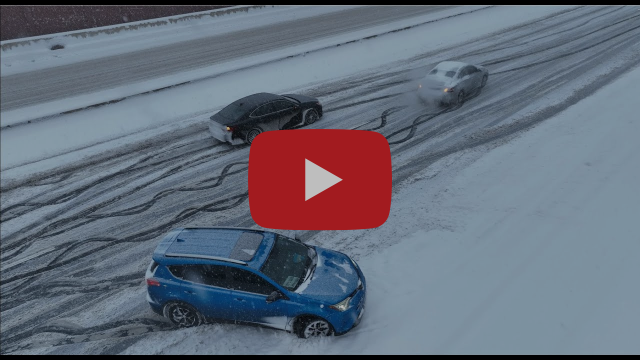
Mississippi officials say a severe ice storm created dangerous travel conditions across northern parts of the state, stranding motorists and shutting down major freight corridors like Interstates 55 and 22 as trucks jackknifed and cars crashed. Mississippi Highway Patrol, working with the Mississippi National Guard and the Mississippi Department of Transportation, prioritized rescuing drivers from stalled vehicles to prevent hypothermia in subfreezing temperatures while clearing blocked roadways caused by fallen trees and repeated freeze-thaw cycles. The storm knocked out power to thousands, disrupted commerce and travel, and resulted in at least 23 deaths statewide, prompting officials to plan a multi-agency review of the response to improve preparedness for future winter events.
Government Leaders Warn: Stay Off Roads During Dangerous Winter Storm
Men’s Journal | Jan 31, 2026
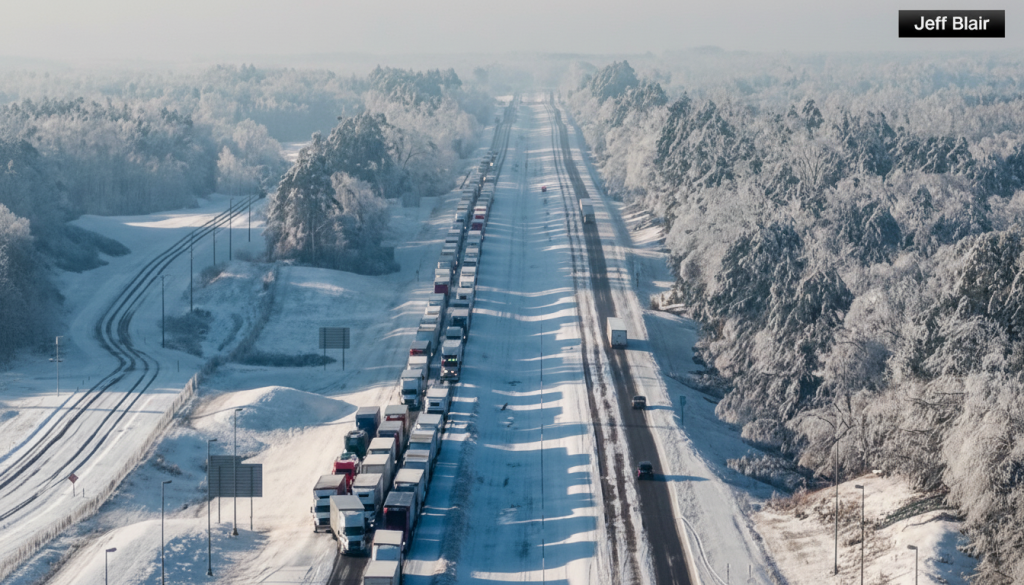
Government leaders across several Southern states are urging residents to stay off the roads as a powerful winter storm brings dangerous conditions, including heavy snow, strong winds and bitter cold. Officials in North Carolina, Virginia, Georgia and South Carolina have issued travel warnings or extended states of emergency, stressing that travel should be avoided unless absolutely necessary to protect public safety and allow crews to treat and clear roads. Forecasts warn that conditions could worsen with wind gusts up to 80 mph, making travel increasingly hazardous through the weekend and into early next week.
Wisconsin's Winter Roads: How Engineers Tackle Extreme Temperature Swings
WKOW | Jan 28, 2026
Wisconsin engineers design roads to handle extreme winter temperature swings, such as the recent shift in Madison from mid-50s temperatures to below zero within weeks. Experts explain that pavement expands when warm and contracts when cold, so flexible pavements are built with regular thermal cracks to manage that movement. The state also enforces winter weight restrictions to protect frozen roads, allowing heavier loads mainly for essential materials like road salt. Researchers continue studying how repeated temperature changes affect pavement over time to improve long-term durability
TxDOT: ‘All Hands on Deck’ as Crews Work to Clear Ice Across Central Texas Roads
kxan | Jan 27, 2026
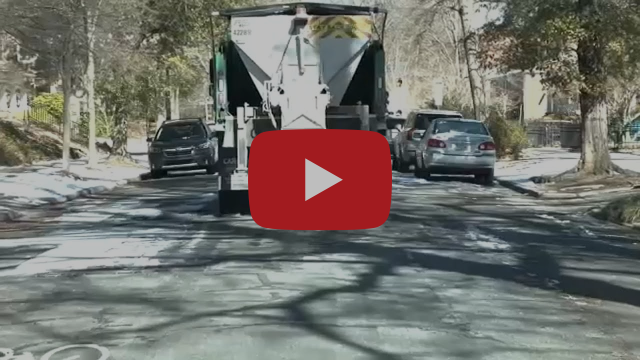
Texas Department of Transportation said road conditions across Central Texas are improving as temperatures rise, but crews remain in full recovery mode after widespread icing disrupted travel and commerce. Working in 24-hour operations and 12-hour shifts, TxDOT, along with maintenance and construction contractors, is prioritizing major highways, bridges, and overpasses to restore reliable access for commuters and freight. Officials warned that lingering ice in northern and western areas could continue to slow reopening timelines, meaning businesses and supply routes may face continued delays until cleanup is complete and conditions stabilize.
Stay connected
Follow NCFOR to stay connected with the latest updates, insights, and resources that support safer, more reliable winter travel across the country. Your feedback and story submissions help us spotlight the trends and challenges that matter most and strengthen the nationwide network of professionals dedicated to keeping America’s roads open and safe all winter long.


